AI Search Optimization: 7 Steps to Organize Your Brand Information
AI search visibility starts with clarity, not keyword repetition. Use this seven-step guide to align your brand name, domain, service description, sources, and structured data.
 Findable 5 min read
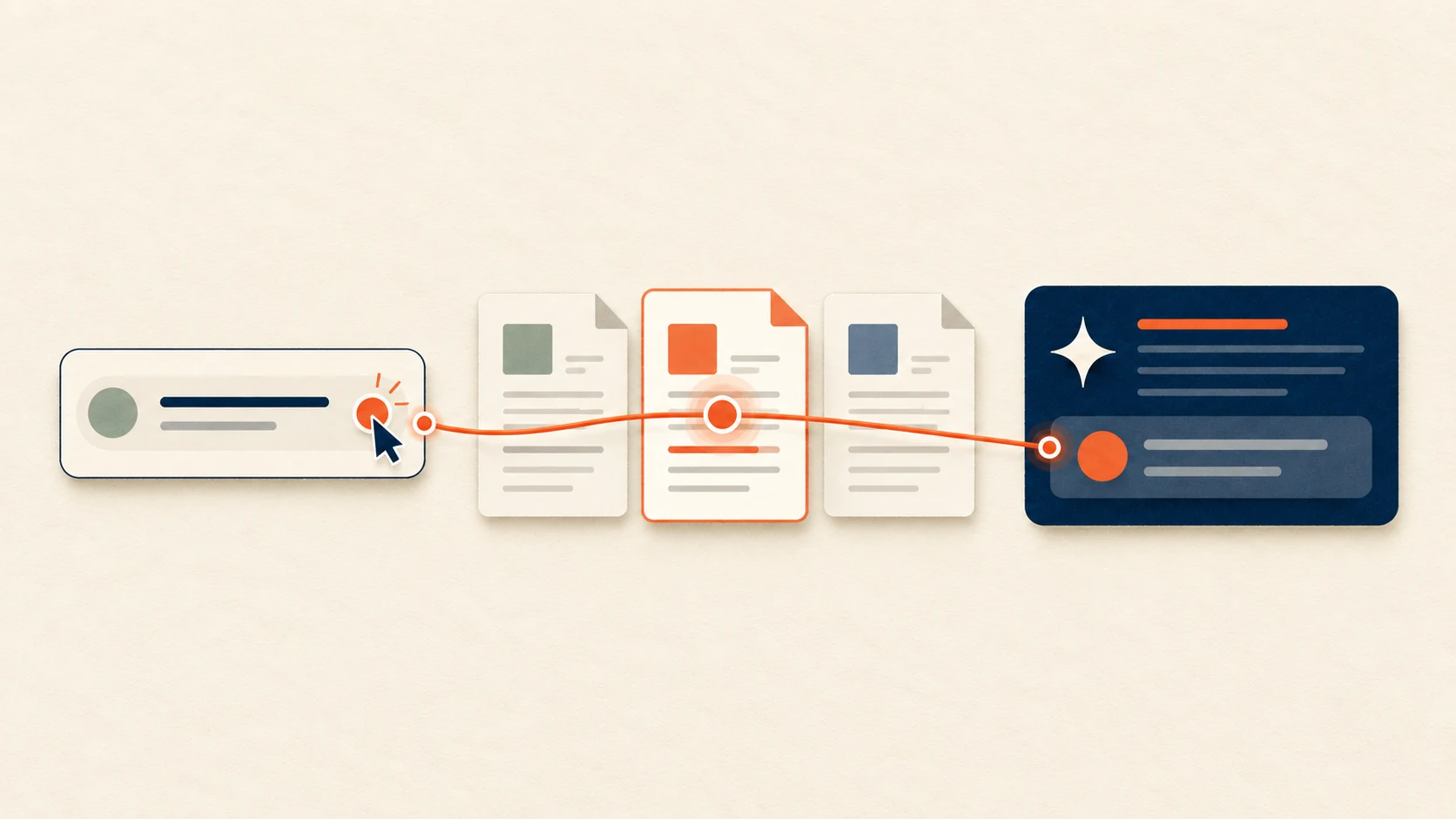
If you want AI search systems to describe your brand accurately, start with a better question than “Does AI know our brand?” The practical question is whether your public pages consistently point to the same company and service.
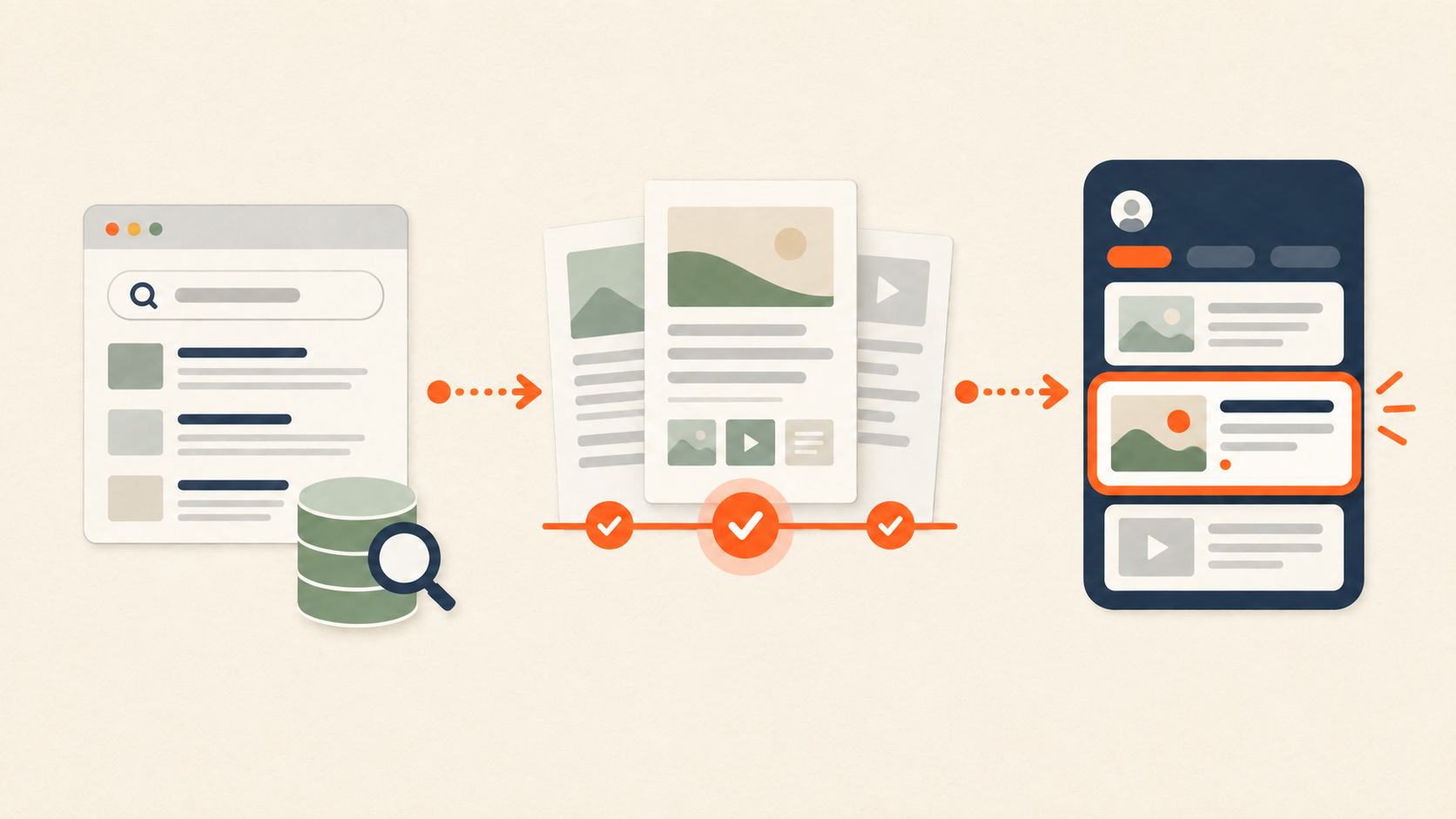
Your brand name, English name, official domain, core service, audience, and supporting sources may look different across pages. When they do, search engines and AI systems have a harder time connecting the brand with a specific topic. The following seven steps help you organize existing public information instead of producing large numbers of new pages.
1. Choose one official brand name
Define the official Korean name, English name, spacing, capitalization, and abbreviations. Use the main brand name consistently in page titles, H1s, company profiles, and author information. If the domain name differs from the brand name, explain the relationship in plain language.
Do not scatter multiple spellings across the site simply to create more search variants. If different names refer to the same entity, make that relationship clear.
2. Write one clear company description
Create one sentence that answers “What does this company do?” It should describe the company and service, not make an unsupported promise.
For example: “Findable is a platform that diagnoses brand mentions, citations, and visibility across ChatGPT, Claude, Perplexity, Gemini, Naver, Daum, and HyperCLOVA AI search, then recommends SEO, GEO, and AEO improvements.”
Use the same meaning across the homepage, company profile, service pages, and author bios. Wording may vary naturally, but the company’s identity and service scope should not change.
3. Connect the official domain and key pages
Make it clear which domain is canonical for the brand. Check the relationship between the main domain, language-specific homepages, company page, service pages, contact page, and policy pages.
Verify that one HTTPS and host variant is canonical, Korean and English canonical/hreflang signals match, external profiles link to the official domain, and any difference between the company name and domain is explained.
Google states that its AI search features follow existing technical requirements and policies. That makes an accessible, understandable public site structure more important than a private AI-only file or a special phrase.
Source: Google Search Central — AI features and your website
4. Align the service scope and audience
A brand entity is not built by a name alone. The site should consistently explain which problem the service solves, for whom, and in which situations.
Check the product or service type, target users, supported languages and markets, supported search or AI engines, measured metrics, and actual deliverables. “Diagnoses AI search visibility” is not the same as “guarantees AI answer visibility.” Do not use the second claim unless it can be proven.
5. Attach original sources and observation records
Instead of repeating a brand description, connect it to sources that allow readers to verify it. For first-party measurements, include the date, scope, query set, engines, sample size, and method. For external sources, include the original link and review date.
Separate confirmed facts, observations under defined conditions, Findable’s interpretation, and unverified hypotheses. Never invent statistics or claim that a specific phrase or markup guarantees AI citations.
6. Match structured data to the visible page
Organization, WebSite, Article, and Breadcrumb structured data can help systems interpret a page. They do not replace visible content or guarantee AI citations. Check that the brand, URL, logo, author, dates, title, description, image, and language relationships match what a reader can actually see.
Structured data is a representation layer, not a substitute for clear content. A mismatch between JSON-LD and the page can create more friction rather than less.
7. Measure with the same questions repeatedly
After the cleanup, fix a question set and test it across Google, Naver, ChatGPT, Claude, Perplexity, and Gemini. Do not treat one response as a permanent success or failure. Record the question, language, engine, model, region, date, brand mention, cited source, description accuracy, competitor context, and change from the previous test.
This is an operating record, not an official ranking score or a guarantee of AI citation. It shows which question groups describe the brand clearly and where the explanation breaks down.
Final checklist
- The official brand and English names are defined.
- One company description is consistent across key pages.
- Canonical domain, canonical URLs, and hreflang are correct.
- Service scope and supported engines are described without overclaiming.
- Every statistic and case has a source, period, and method.
- Structured data matches the visible page.
- Korean and English titles, claims, and sources correspond.
- Measurement conditions for the fixed question set are recorded.
Frequently asked questions
What is a brand entity?
A brand entity is the idea that search engines and AI systems connect a brand name, domain, service, and organization as the same subject. It is not one specific schema and it is not a score that guarantees AI visibility.
Will using several versions of a brand name improve AI search visibility?
There is no sound basis for assuming that. Define an official form and consistently explain when an abbreviation or English name refers to the same brand.
Does structured data alone make a brand appear in AI answers?
No. Structured data may help systems interpret a page, but it does not guarantee AI visibility or citations. It must match the visible content, sources, author, and dates.
Which related articles should I read next?
- Five conditions for content to be cited in AI search
- Seven reasons a brand may not be cited in AI search
- How to measure AI search visibility
Bottom line
Building a brand entity for AI search is not about repeating a keyword. It is about making the brand name, official domain, service description, original sources, and structured data point to the same entity—and checking that clarity with real questions over time.